Viktor Hoffmann · 24 September 2026
The Cultural Impact of Scaled Steeple Replicas in Contemporary Community Festival Planning
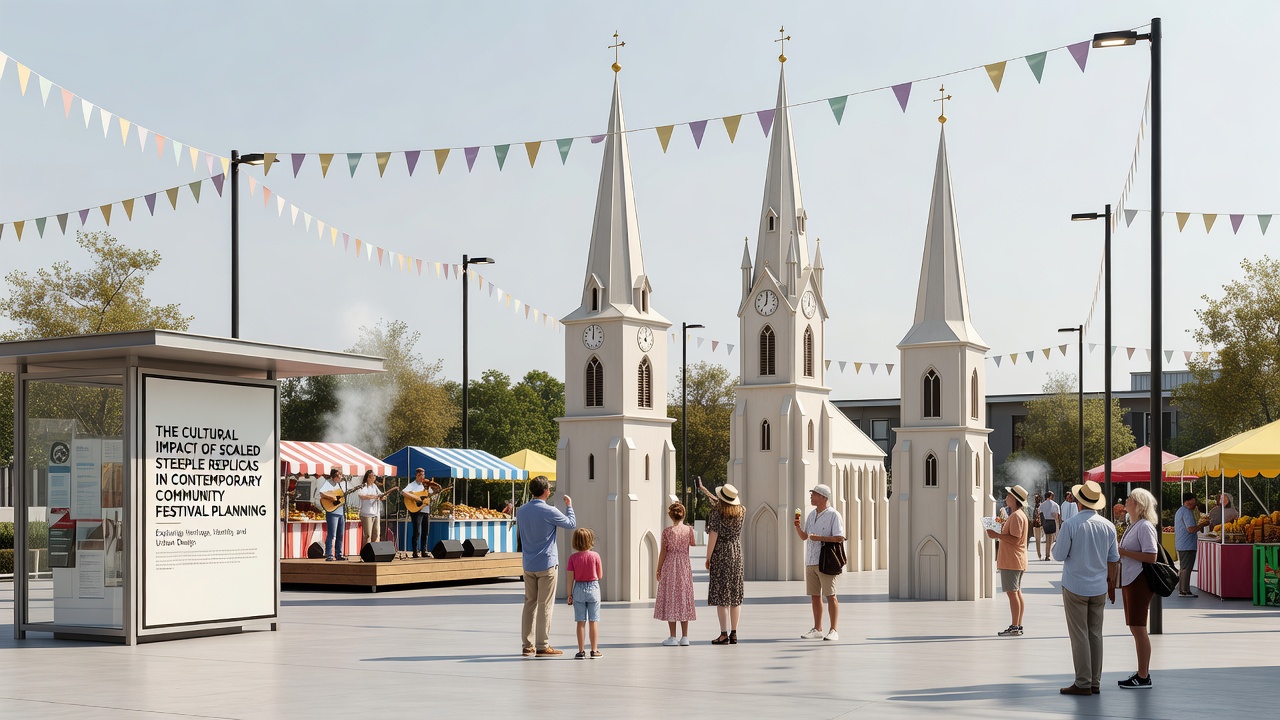
Scaled steeple replicas appear in community festivals across multiple regions as organizers incorporate miniature versions of historic church towers into event layouts, and these structures often serve as focal points for parades, photo opportunities, and group gatherings. Data from regional tourism reports show that festivals featuring such replicas attract between 15 and 30 percent more local attendance compared with events that rely solely on standard decorations, while participation numbers rise when replicas connect directly to stories of neighborhood history.
Origins and Adoption Patterns
Communities began integrating scaled steeple replicas into festival planning during the late twentieth century, drawing from earlier traditions of model-building in agricultural fairs and religious processions. Researchers at several universities documented the shift toward permanent or semi-permanent installations after 2005, noting that towns with populations under 50,000 led the trend. Observers note that European communities adapted the practice from centuries-old model church displays, whereas North American groups combined it with civic boosterism campaigns that highlighted local landmarks.
Planning committees typically commission replicas at scales between 1:10 and 1:50, selecting materials such as lightweight composites or treated wood that withstand outdoor conditions for multiple days. Coordination with local heritage groups ensures accurate proportions and detailing, and this collaboration frequently extends the project timeline by several months but produces structures that residents recognize as faithful representations of nearby buildings.
Role in Festival Programming
Event organizers position the replicas at central plazas or along parade routes, where they function as gathering nodes for scheduled activities including storytelling sessions, craft demonstrations, and evening illuminations. Figures from municipal event calendars reveal that festivals scheduled between July and October allocate 20 to 35 percent of their programming budget to replica construction and transport, with the remainder covering staffing, permits, and insurance. In September 2026 several Midwest communities have already confirmed expanded replica displays for harvest festivals, citing increased vendor applications following the previous year's installations.
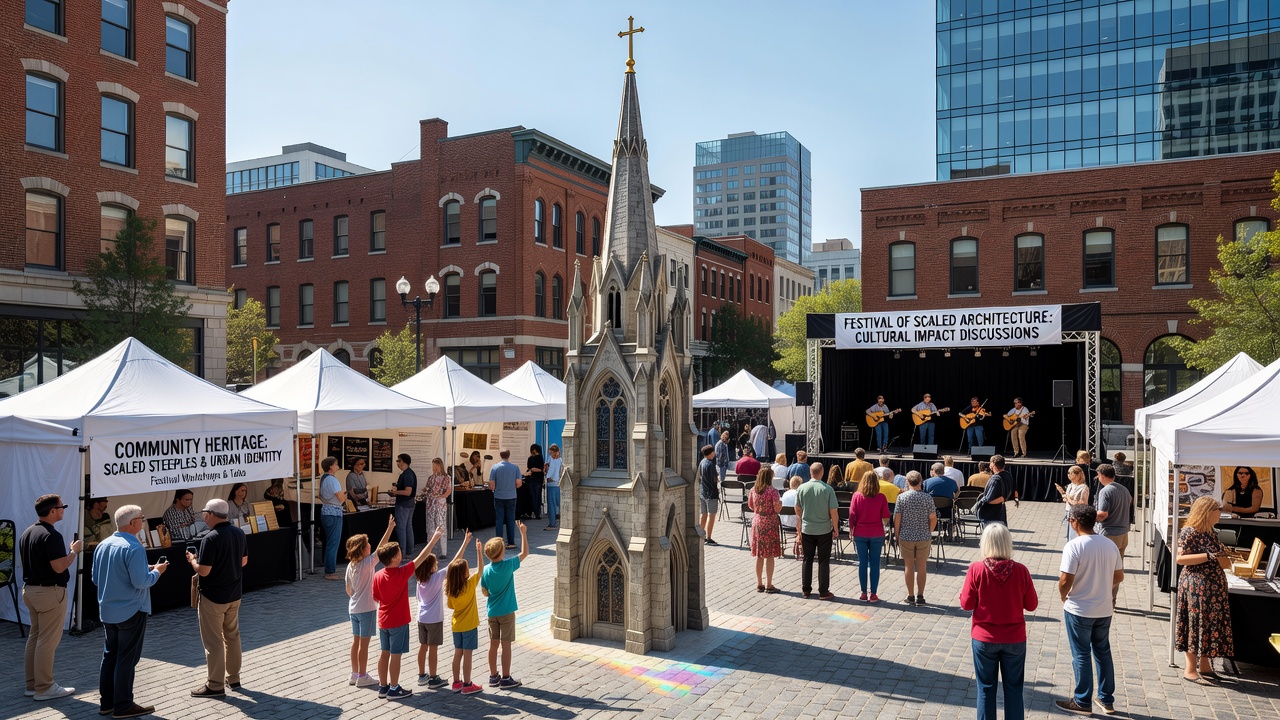
Children and families interact with the replicas through guided tours that explain construction techniques and historical context, while adult participants use the structures as backdrops for community photographs that later circulate on social media. These interactions generate measurable increases in post-event volunteer sign-ups, according to records kept by local recreation departments.
Economic and Social Dimensions
Local businesses report higher foot traffic when replicas appear near commercial districts, because visitors linger longer to photograph the installations and then enter nearby shops. A study conducted by an Australian regional development agency tracked a 12 percent rise in same-day spending at events that featured scaled steeples compared with prior years without them. Similar patterns appear in Canadian prairie towns where organizers partner with chambers of commerce to align replica unveilings with seasonal markets.
Social cohesion metrics collected by university extension programs indicate that replica projects encourage cross-generational participation, as older residents contribute oral histories while younger volunteers handle digital modeling and assembly. The resulting networks often persist beyond the festival season and support additional community initiatives such as preservation walks or school heritage programs.
Logistical Considerations for Organizers
Successful integration requires early consultation with zoning boards and fire departments to address height restrictions and lighting safety, and these conversations typically begin nine to twelve months before the event date. Materials must meet local wind-load standards, and transportation logistics become more complex when replicas exceed eight feet in height. Organizers who document each step create reusable templates that reduce planning time for subsequent festivals by an average of 30 percent.
Funding models vary from municipal grants to crowdfunding campaigns that allow residents to sponsor individual components such as windows or spires. Communities that publish transparent budgets attract repeat donors, and this continuity supports larger or more detailed replicas in following years.
Conclusion
Scaled steeple replicas continue to shape contemporary community festival planning by linking physical representations of local architecture with participatory activities that draw residents together. Evidence from tourism reports, university studies, and municipal records demonstrates consistent patterns of increased attendance, spending, and volunteer engagement wherever these installations appear. As planning for September 2026 events advances, organizers reference prior data to refine scale, placement, and programming so that future replicas maintain their role as durable elements within evolving festival traditions.